TRANSCRIPT
22 MAY 2026
Health priorities for new AMA Queensland president
New AMA Queensland President Associate Professor Erica Gannon spoke to ABC Brisbane's Craig & Loretta about being an emergency physician and stepping up into advocacy
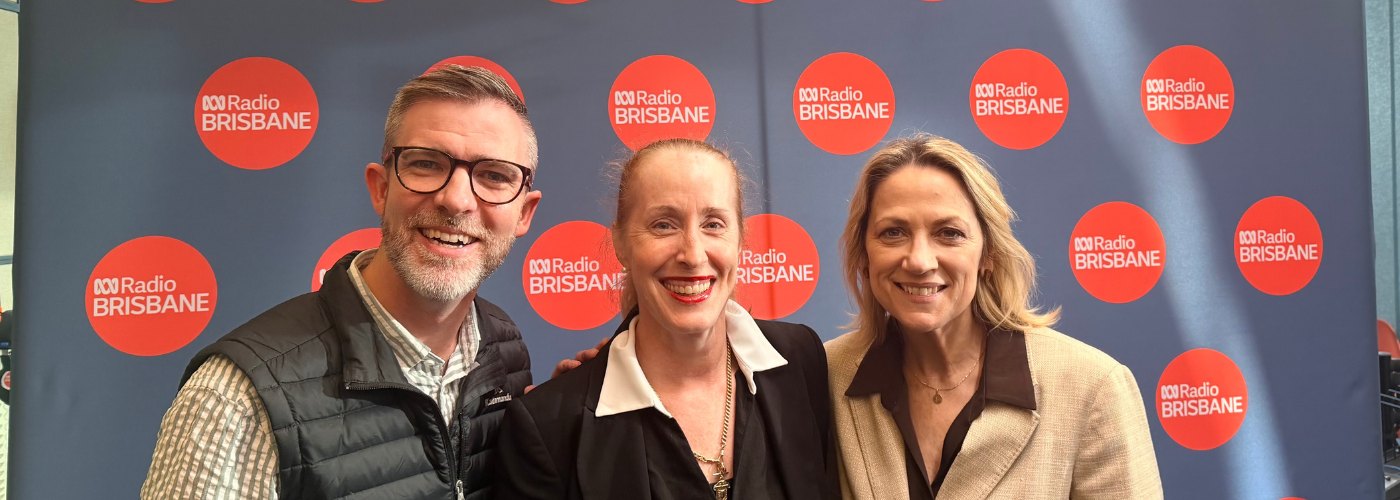
Transcript: AMA Queensland President, Associate Professor Erica Gannon, ABC Brisbane, Drive Breakfast with Craig & Loretta, Friday 22 May 2026
Subject: AMA Queensland leadership and health advocacy priorities
LORETTA RYAN: When it comes to fast-paced, high intensity, demanding and stressful jobs, you’d have to think an emergency department doctor would be fairly high up there.
CRAIG ZONCA: Yes. So, imagine doing that and then adding just a small task to that plate, that of Queensland President of the Australian Medical Association. Because that is exactly what Associate Professor Erica Gannon has just done.
LORETTA RYAN: Yes. The emergency physician will now spread her time across Caboolture and St. Andrews Hospital and AMAQ duties after being elected to the top job following the end of Dr Nick Yim's two-year tenure.
CRAIG ZONCA: So, she has that approach of being in that hospital system. Seeing it in action. Dr Erica Gannon good morning to you.
ASSOC PROF ERICA GANNON: Good morning Loretta and Ryan. Thanks for having me.
LORETTA RYAN: Loretta and Craig, how do you do.
CRAIG ZONCA: You're Loretta, Ryan, I’m Craig!
LORETTA RYAN: Sometimes they call him Ryan.
ASSOC PROF ERICA GANNON: Clearly I haven't had my coffee yet!
LORETTA RYAN: How do you juggle all that?
ASSOC PROF ERICA GANNON: Look, it is certainly a juggling act and I think it's going to be a wild roller coaster ride in the next 12 months. But I'm up for the challenge.
LORETTA RYAN: Yeah. And it is quite a challenge because every day we're hearing about how busy it is on the front line, we're hearing about hospital ramping. How does that affect what you do?
ASSOC PROF ERICA GANNON: It’s certainly a challenge every day. And ramping is not something that's new to Queensland, let alone Australia wide. And those pressures are just getting more and more on us every day. We'd like to see more of those manageable days where it's a little bit easier for us to action and provide care to our patients. But unfortunately we're seeing more of those non-manageable days.
CRAIG ZONCA: Well, you know what it's like in an ED. Where's the bottleneck? Is it in the ed? Is it that bed block getting people from an ED onto a ward? What's the experience you have in that regard Erica?
ASSOC PROF ERICA GANNON: It's really all about flow. Okay. So, we can't get patients in if we can't get them out. And so it's quite a complex issue. So, we need to think about those patients who are long stay patients in the hospital being able to get outside to services like aged care places, have appropriate NDIS funding, but then we've also got to look at it from the front end of things. We need to ensure that we've got enough preventive care, we've got those acute mental health services in the community that we have enough frontline GPs so that we can access appointments so our patients can actually get in. And though even just having preventative services like older persons emergency networks so we can keep those older persons out of our hospitals, do they actually need to be there?
LORETTA RYAN: And would you say we do have enough of those things, enough GPS on the front line?
ASSOC PROF ERICA GANNON: Look, we'll always need more doctors and Queensland Health itself has shown that we're going to be in the realm of 6,000 doctors short by 2032. Queensland needs more doctors and we need a plan to get them there.
CRAIG ZONCA: Did you just say 6,000 doctors?
ASSOC PROF ERICA GANNON: Yeah.
CRAIG ZONCA: Where are they going to come from? Are we training that many through our university system? Are we going to be relying on skilled doctors coming in from overseas? Where are they coming from Erica?
ASSOC PROF ERICA GANNON: I'm glad that you asked that question. We've put out our Workforce Action Plan and we'd love to see the government's plan on how they plan to find those doctors. It's a complex issue. We haven't seen that yet. I think building blocks are going to be university places for our local graduates. We want to be able to have those supported and funded places for our rural and regional students who will go back to their communities and give back to the communities where they are. We need to be able to support our doctors in training and working with government and the medical colleges so that we have those specialist training positions available so that those doctors in training can go and deliver our specialists to where their care needs to be.
CRAIG ZONCA: Well, you're saying 6,000 doctors. Multiply that out across the health sector from nurses through to physios and other Allied Health. If we don't get those staff… We were talking in the last half hour with the Moreton Bay mayor about playing catch up with infrastructure in one of the fastest growing regions. We've got to play catch up with healthcare.
ASSOC PROF ERICA GANNON: 100%. Absolutely we do. And we'd love to see both the Federal Government step up to match the state's funding so that we have a greater pool of money to be able to distribute and put back into our health system. Queenslanders deserve access to healthcare regardless of their postcode.
LORETTA RYAN: And you are the one that's advocating for those Queenslanders. On 612 Brisbane this morning you're hearing from Associate Professor Erica Gannon, the new Queensland President of the Australian Medical Association. How are conversations with the state and federal governments? You're the one that has to go in there fighting for us and it's only early days. How is your relationship with them?
ASSOC PROF ERICA GANNON: I'm only a few days into the job so I've yet to have some of those high-level meetings. But I'm looking forward to having those discussions and putting forward the plans. It'd be great to see implementation of some of the suggestions that we've put forward in our Workforce Plans, and I really hope that we can make some progress in this space.
CRAIG ZONCA: Yes. So, you've stopped by our office before, the Health Minister's office, potentially. Dr. Erica Gannon, for yourself. Okay. Why did you choose emergency medicine as your speciality? Why did you go down that path?
ASSOC PROF ERICA GANNON: I think it all started when I was about five years old. My granddad came out from the UK and he was a GP, so his practice went from Lismore to Warwick, all the way up to doing anaesthetic lists at the mater. So, ever since I was knee high to a grasshopper, he was my inspiration for going into medicine. I think the good thing about ED is you're very generalised in your skills. It's a different challenge every day. I never know what's going to walk through the door. It's a little bit of procedural, a little bit of medicine. Some people describe emergency physicians as adrenaline junkies. I think for me it's more about the details. I like trying to figure out what's going on with the patient. Can I sort it? If I can't, then I refer it on to someone who's got more skills and a bigger brain than me to try and help work out what the problem are for the patient.
LORETTA RYAN: We get so many listeners who work in the health sector calling in and they tell us about how exhausted they are. Can you feel that as well? And how can you help them?
ASSOC PROF ERICA GANNON: Patients being exhausted?
LORETTA RYAN: No, I mean frontline workers.
ASSOC PROF ERICA GANNON: We really need to make sure that we're creating healthy workplaces and being able to protect our doctors from physical and psychological harm. We all come to work every day knowing that we just want to be able to provide the best care that we can. But with increasing medical complexity with patients, we need to be able to have enough staff and enough resources to be able to provide that care.
CRAIG ZONCA: Ok, you talk about resourcing, you talk about the conversations you need to have with the state government. Dennis, on the text line poses a very interesting question, Erica, and I'm keen to get your thoughts on this. He says with the huge cost to the Olympics and when we talk about infrastructure and hospitals and everything else, should health get priority over spending on Olympics? How would you answer that question as the new president of the Australian Medical Association Queensland?
ASSOC PROF ERICA GANNON: Look, I would hope that we would have enough money in the pot to make sure that my children, your parents, your grandparents have the ability to access care when they need it. We're all going to need to end up with some form of medical care at some point in our lives. And it's important that we actually have the facilities, the resource and the infrastructure to be able to deliver that care.
CRAIG ZONCA: I know this is the first of many conversations we will have. Associate Professor Erica Gannon, thanks so much for joining us this Morning here on 612 ABC Brisbane.
ASSOC PROF ERICA GANNON: Thank you so much for having me.
Download transcript as a PDF
Contact the AMA Queensland Media Team